
Some Businesses Communicate Best Through Visuals

When people think about website strategy, the conversation often revolves around copywriting, SEO and page structure. Those things absolutely matter, but not every business communicates in the same way.
For some brands, imagery does a lot of the heavy lifting.
I often refer to these as image-forward businesses: brands whose work is best understood through what people see rather than what they read.
Think about the last time you hired a florist, photographer or interior designer. Chances are, you weren’t evaluating them based solely on what they said. You were looking at their work and asking yourself whether you could picture them bringing your vision to life.
The imagery creates the emotional connection. The copy provides context, builds trust and helps guide visitors toward taking the next step.
When a business relies heavily on visuals, the challenge becomes creating a website that showcases the work without competing with it.
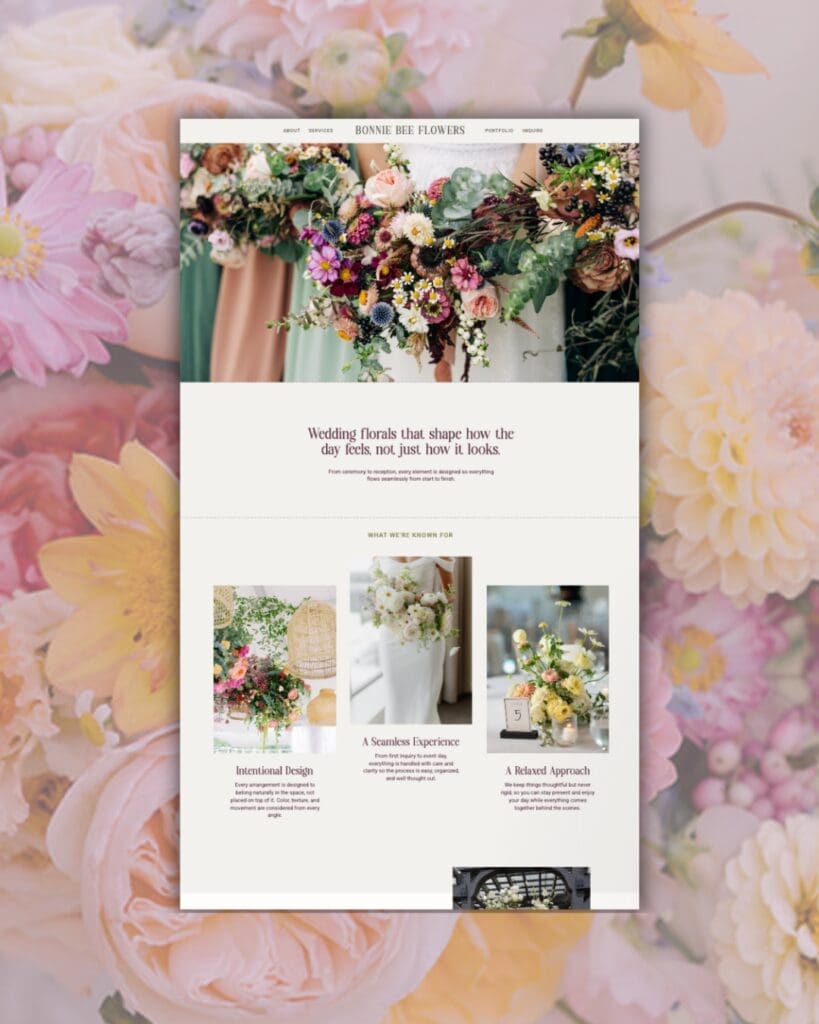
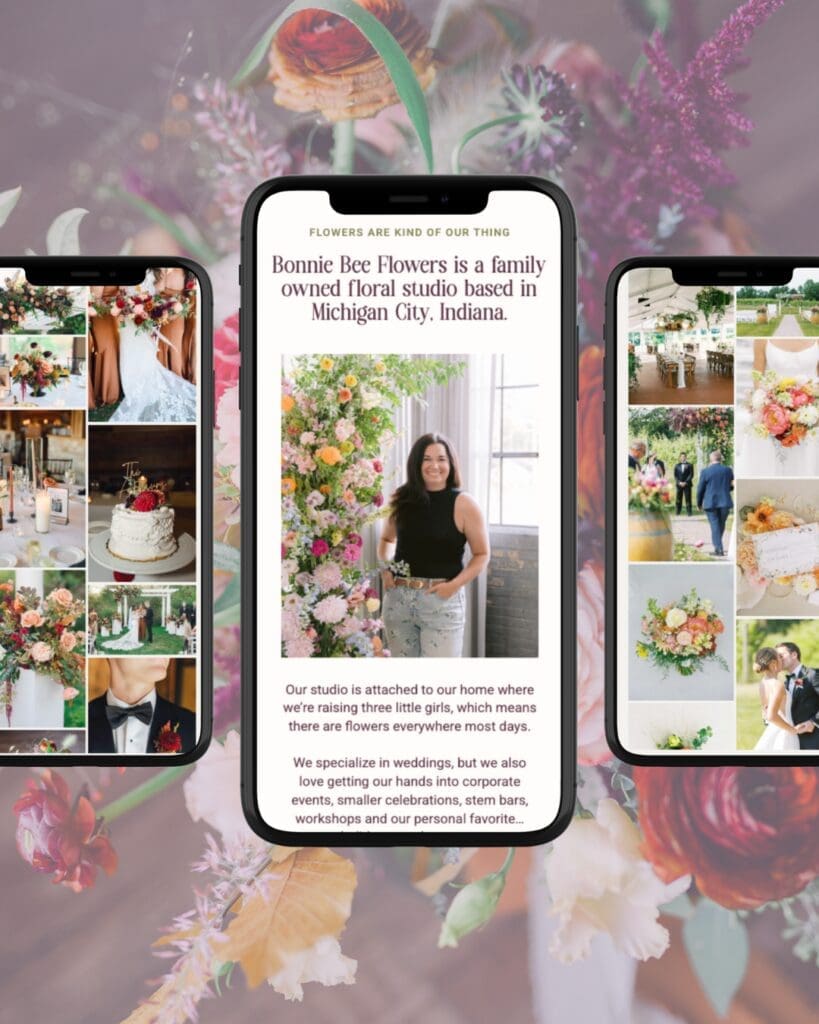
When Bonnie and I started working together, we knew her new website needed to do more than simply display beautiful floral arrangements. It needed to create an experience that reflected the quality of her work and helped potential clients envision what was possible for their own event.
That idea became the foundation for the entire project.
When Imagery Leads The Conversation
Copy is one of the most important components of a successful website. It helps visitors understand what you do, supports search engine optimization and guides people toward taking action, but not every business needs to communicate in the same order.
For highly visual brands, like florists, photographers and event planners, imagery often creates the first impression. The photographs capture attention, establish credibility and help potential clients imagine themselves working with you before they’ve read a single sentence.
The copy still plays an essential role. It provides context, reinforces expertise and supports the customer journey. The difference is that the visuals often lead the conversation, while the copy supports it.
That’s especially true for businesses like florists, photographers, interior designers and other creative professionals whose work is best experienced visually.
Designing Around The Way People Actually Decide
When designing Bonnie’s website, the goal wasn’t to add more information. Instead, the goal was to create an experience that showcased the work in a way that felt elevated, intentional and easy to explore.
- The layouts were designed to create breathing room around the imagery rather than crowding it.
- The navigation was kept straightforward and intuitive.
- The typography remained understated so the floral designs could remain the focal point.
- Strong copy was still incorporated throughout the site, but it was intentionally designed to support the imagery rather than compete with it.
Every design decision was made with one question in mind: How can we help visitors connect with the work?
Letting The Work Do The Talking
One of the biggest mistakes I see image-forward businesses make is hiding their strongest asset. Beautiful photography gets buried beneath lengthy paragraphs, galleries become difficult to find, and visual storytelling takes a back seat to information that could have been communicated more simply.
The reality is that people often make decisions much faster than we think.
When someone lands on a florist’s website, they’re already asking themselves: Can I picture my wedding looking like this? A website should help answer that question quickly and confidently.
The Best Websites Aren’t Built From Templates
One reason I love projects like Bonnie Bee Flowers is because they remind me that good website strategy isn’t about following a formula. It’s actually about understanding the business, its audience and the way people naturally make decisions.
For some businesses, that means leading with copy. For others, it means leading with visuals.
The strongest websites recognize the difference.
Is Your Website Supporting Your Visual Work?
If you’re a florist, photographer, interior designer or another image-forward business, here are a few questions worth asking:
Can visitors see your best work immediately?
Your strongest imagery should appear above the fold on your homepage. If someone has to click through multiple pages to find your portfolio, you’re creating unnecessary friction.
Is your portfolio easy to find?
I’ve seen beautiful creative businesses hide their galleries behind dropdown menus or secondary navigation links. Your work should be one of the easiest things to access on your website.
Are your images large enough to make an impact?
Tiny photos rarely create an emotional connection. Give your work room to breathe and don’t be afraid to let strong imagery take up space.
Does your website feel cluttered?
When every section is competing for attention, nothing stands out. Strategic spacing, thoughtful hierarchy and simpler layouts often allow the work to shine.
Are you showing the type of work you want more of?
Many creative businesses continue displaying projects that no longer align with their goals. Your website should attract the work you want next, not just showcase everything you’ve ever done.
These were some of the considerations that guided the Bonnie Bee Flowers website. Rather than creating a website that competed with the imagery, we designed one that helped showcase it more intentionally.
Beautiful work deserves more than a place to live online. It deserves a website designed around the way your clients actually make decisions.
If you’re ready for a more thoughtful, strategic online presence, I’d love to chat.
< Back to all posts


